
Hull Rupture Modifiers and Artifacts Guide
How Hull Rupture modifiers and artifacts work: shop vs event pools, confirmed effects, conditional bonuses, and which builds are worth committing to.
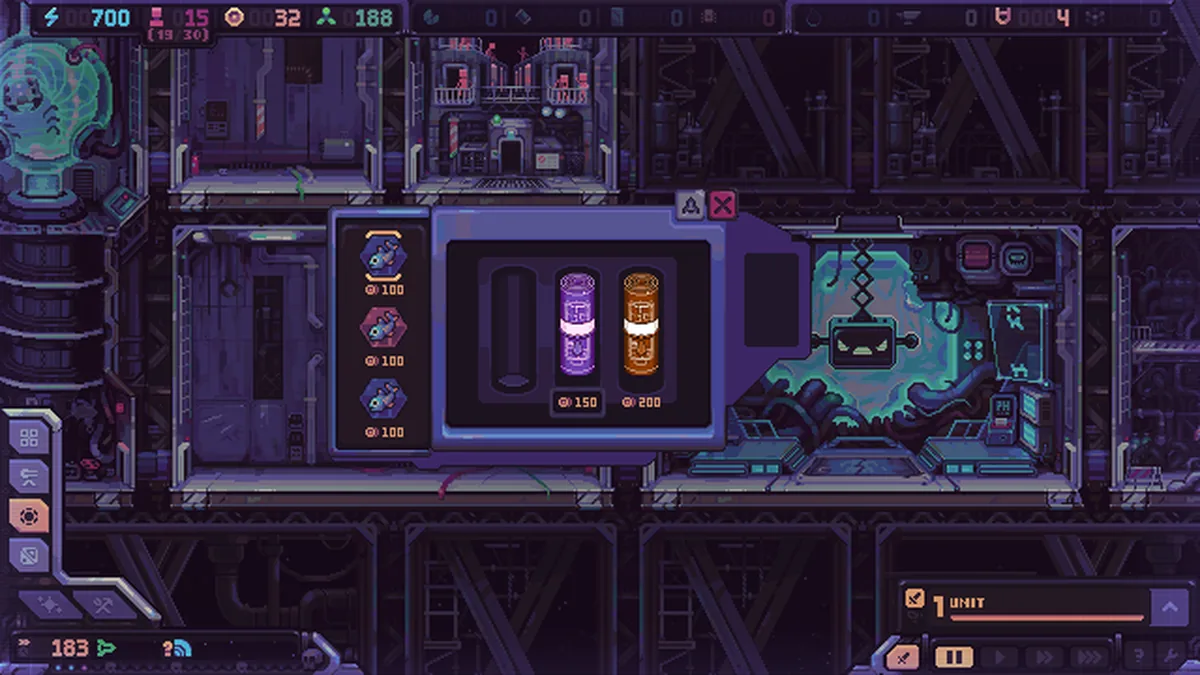
Modifiers are the reason two Hull Rupture runs with the same ship can play nothing alike. They are upgrades installed in individual modules, bought in shops or awarded by narrative events, and they can turn a cheap turret into a carry or a production room into a resource engine.
The system has a trap: most event modifiers cannot be purchased, and some shop modifiers never appear in events. You cannot force a build by visiting every shop. You build around what the run gives you.
"Modifiers are upgrades installed in individual ship modules. You can purchase them in Shops or obtain them through narrative events, but each source draws from a largely different pool."
— Official source: Hull Rupture Devlog #3
For the module side of a build, use the tier list; for where modifiers come from, read shop.
A Reproducer modifier does nothing if the Reproducer is not staffed. Check the build before you buy the box.
Modifiers vs artifacts
The two systems are easy to confuse because both are permanent upgrades. They operate at different levels.
| System | Where it applies | How you get it | Scope |
|---|---|---|---|
| Modifier | One module | Shops, events | Local to that room |
| Artifact | The run / ship | Events, rewards, unlocks | Global or build-wide |
A modifier makes a specific room better. An artifact changes the rules for the whole run. The Reproducer's Eyes artifact, for example, makes all Beam turrets apply Fragility; that is a global effect, not a single-module upgrade.
Artifacts also have a meta layer: they unlock across runs. A new artifact can change how you approach the next run before you even start it.
How modifiers are acquired
There are two main sources, and they draw from different pools.
Shops: Post-battle shops and Black Markets sell modifiers. The shop pool is the reliable source: if you see a modifier you want, you can usually buy it with tokens and materials. Some shop modifiers never appear in events.
Narrative events: Random-event stars, the Great Old One, and some story choices award modifiers. Most event modifiers cannot be purchased at all, which makes them the run's true lottery.
The distinction matters for planning. If you need a specific modifier for a build, the shop is the place to look. If you are open to anything, events offer effects you cannot buy.
A third source is module drops. Some modules come out of crates with modifiers already installed. That is a free upgrade, but you do not control which modifier or which module.
Confirmed modifiers and effects
The full list is not public. These effects have appeared in official material or hands-on previews:
| Effect | Type | What it does | Build |
|---|---|---|---|
| Reproducer's Eyes | Artifact | All Beam turrets apply Fragility | Beam turret stack |
| Cheat Code | Artifact | Powerful effect, nerfed in September | Was an auto-pick; now situational |
| Mushroom modifier | Event modifier | Mineral Generator boosts Minerals while Mystic Goo is below 10 | Low-Goo production |
| 1x1 isotope modifier | Event modifier | Gain 3 Isotopes per 1x1 module built | Wide, small-module hull |
The pattern is that the strongest effects are conditional. Reproducer's Eyes wants Beam turrets. The mushroom modifier wants a Mineral Generator and low Mystic Goo. The isotope modifier wants many 1x1 modules. None of them is a flat "+10% damage" that fits every ship.
Conditional modifiers explained
A conditional modifier checks a state and pays out when the state is true. The mushroom example is the clearest:
- Condition: Mystic Goo below 10.
- Effect: Mineral Generator produces more Minerals.
- Implication: You are rewarded for not stockpiling Mystic Goo, which is the opposite of the usual "build every resource" instinct.
That kind of design is why reading the modifier text matters more than its rarity. A legendary modifier that requires a module you do not own is worse than a common modifier that fits your layout.
The preview's isotope modifier is another example. It rewards building many 1x1 modules, which pushes toward a wide, cheap hull rather than a compact, high-tier one. If you take it, your hull plan should change.
Build-around examples
Beam/Fragility build: Take Reproducer's Eyes, stack Beam turrets, and place them on long lanes where they can apply Fragility to multiple targets. The build is turret-heavy and energy-hungry; plan generators before turrets.
Low-Goo production build: Take the mushroom modifier, keep Mystic Goo below the threshold, and use the extra Minerals to expand hull and modules. The build is economy-first and needs a strong repair line because it delays advanced production.
Wide 1x1 build: Take the isotope modifier and build many small modules. The build is slot-hungry and mass-heavy, so engines and travel speed become the constraint.
Each build has a failure mode. The Beam build dies to a brownout; the low-Goo build dies to a Mystic Goo event; the wide build dies to slow travel and a boss it cannot reach in time.
When to skip a modifier
A modifier is not automatically worth its cost. Skip it when:
- It requires a module you do not have and cannot build. A modifier for a Rare module is dead weight until the module appears.
- It conflicts with your economy. A modifier that boosts a resource you are deliberately not producing is a distraction.
- It costs the population buffer you need for an event. Some modifiers are bought with humans, directly or indirectly.
- It is a shop modifier you cannot install. Check the installation cost before buying, not after.
The shop's themed crates make this harder because you cannot choose the exact modifier. If a crate is expensive and your build is already coherent, saving the tokens for a repair or a module may be better.
Modifiers and the roguelite loop
Modifiers are per-run; artifacts unlock across runs. That split is the progression design. A failed run still contributes to the artifact pool, and a new artifact can open a build you could not try before.
The developers have said no run is doomed by bad luck alone. The modifier system supports that claim only if you adapt: the run that refuses to change its plan because it wanted a different modifier is the run that loses. The tier list is a starting point; the modifier draw is the actual game.
Sources and further reading
Related
FAQ
What is the difference between a modifier and an artifact? A modifier is installed in one module. An artifact is a run-wide effect that can change multiple systems.
Can I buy every modifier in the shop? No. Shops and events draw from largely different pools, and some modifiers are event-only.
Do modifiers stack? The game supports multiple modifiers, but the exact stacking rules are shown in-game. Assume diminishing returns until proven otherwise.
Do modifiers carry between runs? No. Modifiers are per-run. Artifacts are the persistent unlock layer.
What is the best modifier? Reproducer's Eyes is the strongest confirmed build-around, but only if you commit to Beam turrets. A conditional modifier that fits your ship beats a rare one that does not.
More Hull Rupture Guides
How Hull Rupture's hull construction works: the 15-block deck, placement rules, stilt corridors, costs, and layouts that survive late waves.
Hull Rupture treats humans as a resource. Learn where to assign them, when to convert them in the Bioreactor, and how to avoid a population death spiral.
Hull Rupture module guide: confirmed production rooms, adjacency bonuses, module kits, selling duplicates, and placement rules for a stable ship.
Hull Rupture launches on PC, Mac, and Linux on November 4, 2026. There is no PS5, Xbox, Switch, or mobile version. Here is the full platform status.
How Hull Rupture's energy economy works: generator staffing, module upkeep, brownout recovery, and when to stop building before the ship stalls.
Hull Rupture has no full reviews yet. Here is what the April preview build praised, what it criticized, and how the demo's reception frames the launch.
Hull Rupture releases November 4, 2026 on PC, Mac, and Linux. Here is what Steam has confirmed about the price, launch time, demo, and day-one content.
How repair works in Hull Rupture: breach priority, energy costs, repair module placement, and when to abandon a damaged section instead of rebuilding it.